 ultimate-guide
How to Inspect Used Cars Before Buying: 2026 Guide
Table of Contents
- Start With a Pre-Purchase Inspection Checklist
- Exterior, Tires, and Rust: What to Look For
- Under the Hood: Fluids, Belts, and Cold Start Checks
- Used Car Test Drive Tips: What to Feel and Listen For
- Digital Diagnostics: OBD-II Scanners and EV Battery Health
- Questions to Ask a Used Car Dealer Before You Sign
- How to Inspect Used Cars for Flood Damage and Hidden Accidents
- Safety-Critical vs. Cosmetic Defects: A Negotiation Framework
- Frequently Asked Questions
Last Updated: September 23, 2026
Start With a Pre-Purchase Inspection Checklist
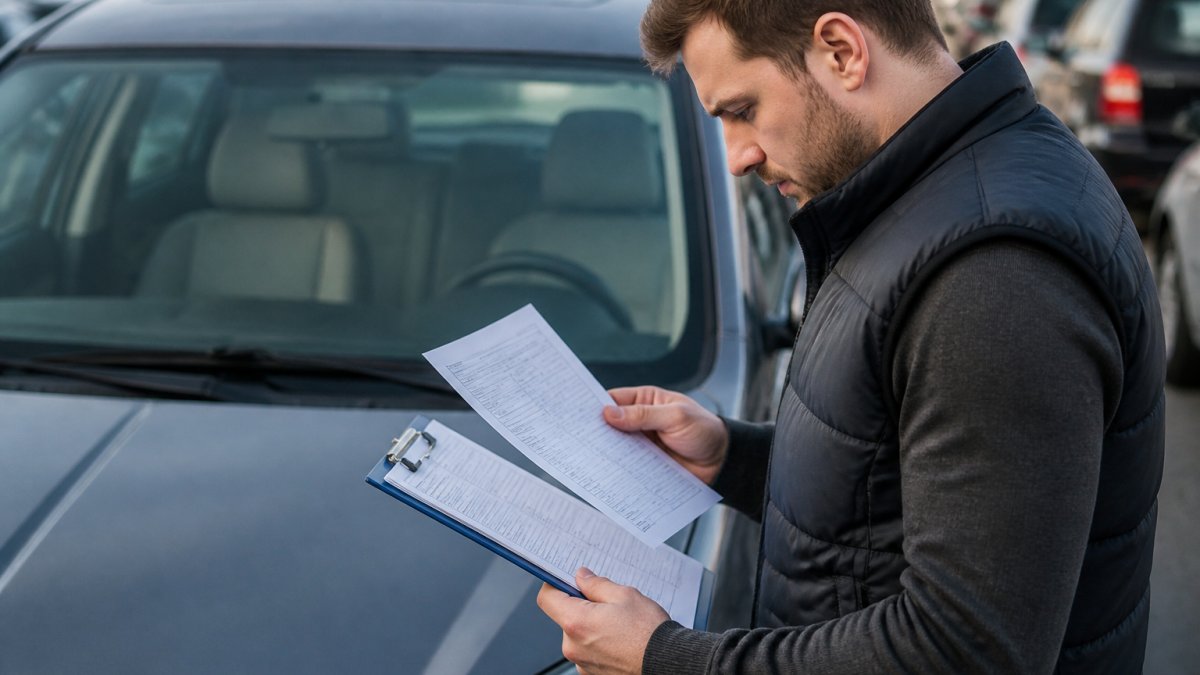
A pre-purchase inspection is a systematic evaluation of a used vehicle's mechanical, structural, and cosmetic condition before you commit to buying it. Learning how to inspect used cars before buying starts with one rule: never trust the seller's word alone, whether that seller is a private party or a dealership.
Documents and VIN Verification
A VIN verification confirms the 17-character code on the dashboard, door jamb, and title all match. Mismatched VINs signal a cloned or rebuilt vehicle. Ask for the title, registration, and service records in one sitting.
Tools You'll Need in the Driveway
- A bright flashlight or headlamp
- A tire tread depth gauge
- An OBD-II scanner
- A magnet (for body filler detection)
- Clean rags and a small notebook
Exterior, Tires, and Rust: What to Look For
Walk the entire vehicle in daylight before you open a single door. Body panel gaps should be even and consistent; uneven gaps often mean prior collision repair. Run a magnet along fenders and quarter panels. It won't stick to body filler, which reveals hidden accident damage.
Under the Hood: Fluids, Belts, and Cold Start Checks
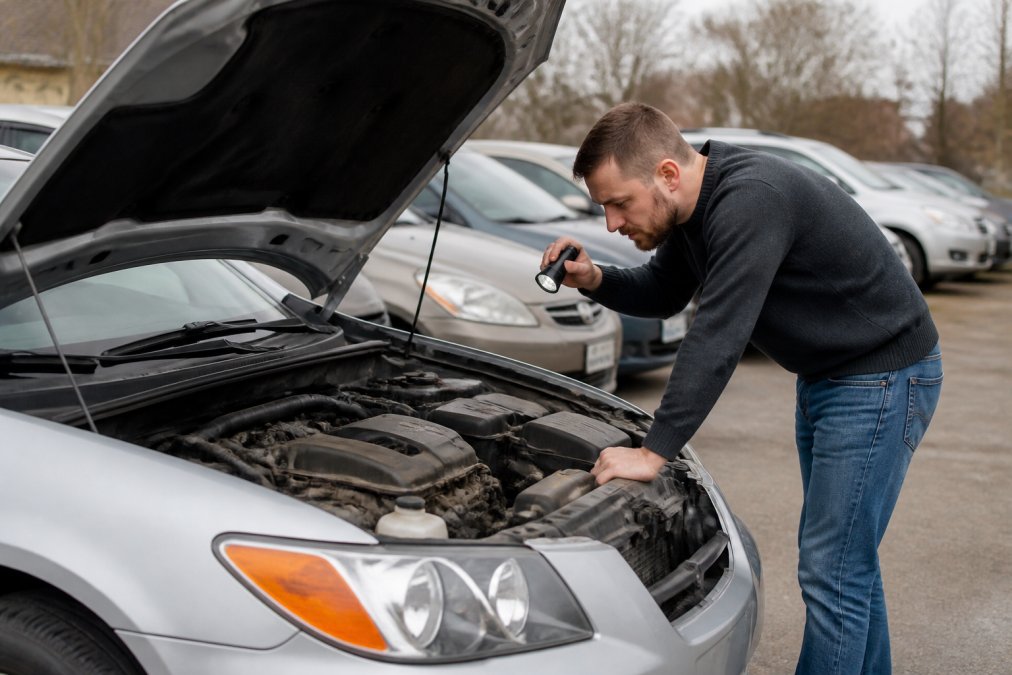
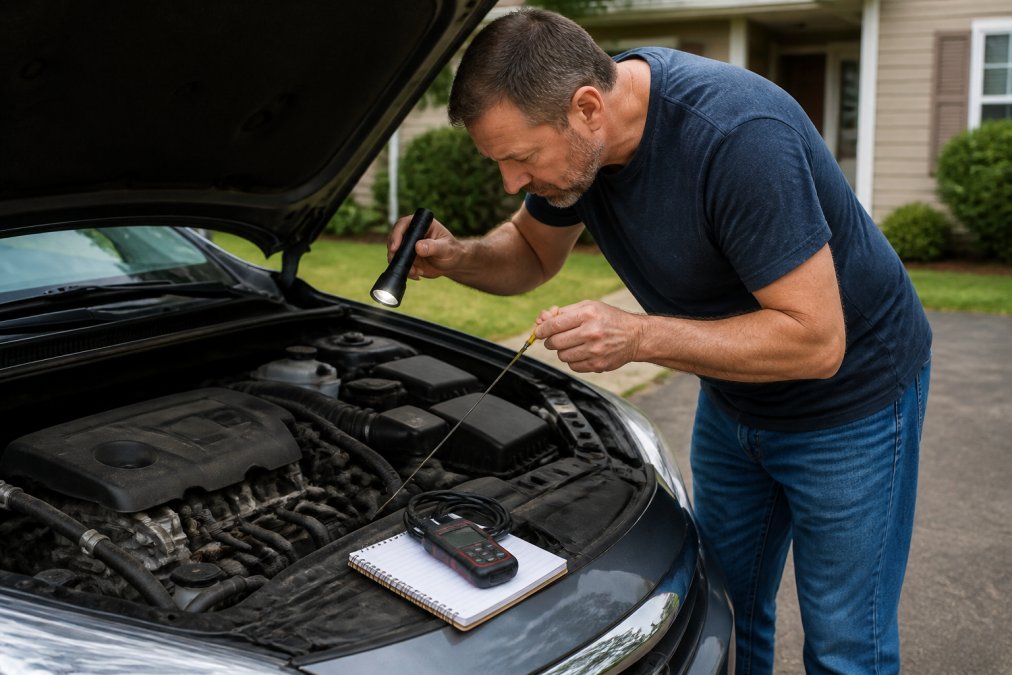
Open the hood before the engine has run. A cold start reveals more than a warm one: listen for ticking lifters, watch for blue exhaust smoke, and check idle stability once it settles. Pull the oil dipstick. Milky or gritty oil points to a blown head gasket or internal wear. Dark, burnt transmission fluid smells acrid and signals neglected service.
Used Car Test Drive Tips: What to Feel and Listen For
A proper used car test drive lasts at least 20 minutes and covers city streets, highway speeds, and a few hard stops. Anyone who limits you to a parking-lot loop is hiding something. Start the engine cold, then drive immediately.
Digital Diagnostics: OBD-II Scanners and EV Battery Health
An OBD-II scanner plugs into the port under the dash and reads stored trouble codes, pending codes, and readiness monitors. A check engine light that was recently cleared will show incomplete readiness monitors, a telltale sign someone erased codes before your visit. Consumer-grade scanners cost little and pay for themselves on one inspection.
| Check | Tool | What It Reveals |
|---|---|---|
| Stored fault codes | OBD-II scanner | Hidden engine/transmission issues |
| Battery state of health | Manufacturer diagnostic | EV/hybrid range loss |
| Body filler | Magnet | Prior collision repair |
| Tread depth | Tread gauge | Tire replacement cost |
Questions to Ask a Used Car Dealer Before You Sign
The right questions to ask a used car dealer separate a transparent seller from one hoping you won't look closely. The goal is not just to ask, but to ask questions whose answers you can independently verify. A seller who dodges these is telling you something.
Title and Brand Questions
Ask to see the physical title, not a photocopy. Match the VIN on the title to the VIN on the dashboard and the driver's-side door jamb. Then ask directly:
- "Is the title clean, salvage, rebuilt, or flood-branded?"
- "Has this vehicle ever been declared a total loss by an insurer?"
- "Is there an active lien on the title?"
History and Service Questions
Ask for the vehicle history report and read it yourself rather than accepting a summary. Look for title brands, odometer readings across time, accident or damage entries, and the number of prior owners. A common pattern is a car that changed hands at auction multiple times in a short window, often a sign of a problem the seller could not resolve.
Then ask for service records:
- "Do you have receipts for oil changes, timing belt, or transmission service?"
- "When were the brakes and tires last replaced?"
- "Has the vehicle had any open safety recalls?"
Verification and Price Questions
Ask: "Has this car ever been in a flood or major accident?" Then verify with the history report and a physical inspection. Request a written cost estimate for any known issues before you negotiate, and ask whether the seller will allow an independent pre-purchase inspection at your expense. A dealer who refuses an independent inspection is the clearest red flag in the entire process.
How to Inspect Used Cars for Flood Damage and Hidden Accidents
Flood damage and hidden accident damage are the two defects most likely to be concealed, and the two most likely to cost you the most after purchase. This section gives you a systematic sequence and, more importantly, a framework for deciding what is a deal-breaker versus a negotiation point.
Flood Damage: Where Water Hides
Water leaves evidence in places sellers rarely clean. Work through this sequence:
- Smell first. Open the doors and trunk and let the car sit closed for a few minutes. A musty, mildewed, or overly perfumed smell is a warning. Heavy air freshener is sometimes used to mask exactly this.
- Pull the carpet. Lift the trunk mat and the floor mats in the footwells. Look for a visible waterline stain, damp padding, or rust on the seat mounting bolts and rails. Rusted seat rails on an otherwise clean car are a strong flood indicator.
- Check the wiring. Look under the dash and behind kick panels for corroded connectors, green or white residue on terminals, and brittle or stiff wiring. Water damage to a wiring harness can cause electrical gremlins that are expensive and difficult to trace.
- Inspect the lights and glass. Foggy headlights with water inside, or condensation in the instrument cluster, often signal a submerged vehicle.
- Check the seatbelt. Pull the seatbelt all the way out and look for a waterline or mildew along the webbing. Seatbelts are rarely replaced after a flood.
Hidden Accident Damage: What a Magnet Won't Catch
A magnet detects body filler in steel panels, but it will not reveal frame damage or a repaired unibody. Look for these instead:
- Panel gaps. Uneven gaps between the hood, fenders, doors, and trunk lid suggest the panels were removed or replaced.
- Paint overspray. Run your finger along trim, weatherstripping, and the edges of the windshield. Overspray on rubber or plastic means the area was repainted.
- Mismatched paint. View the car in direct sunlight from several angles. A panel that is a slightly different shade or has a different texture was likely replaced.
- Bolt heads. Look at the bolts holding the fenders and hood. Fresh scratches or missing paint on bolt heads mean the panel was removed.
- Frame rails and strut towers. Look for wrinkles, creases, or weld marks in the engine bay and under the car. These are structural and are the hardest repairs to hide.
Safety-Critical vs. Cosmetic: The Prioritization Framework
Not every defect deserves the same reaction. Sort every finding into two buckets before you talk price.
- Frame or unibody damage
- Structural rust (soft, flaking metal in rockers, subframe, or floor pans)
- Brake, steering, or suspension faults
- Deployed or missing airbags
- Flood damage or a flood-branded title
- Cracked or compromised tires below 4/32 inch tread depth
Cosmetic defects are negotiation levers, not deal-breakers:
- Scratches, dents, and faded paint
- Worn upholstery or a stained headliner
- Minor surface rust on non-structural panels
- A cracked trim piece or worn floor mats
Use this framework:
- List every defect found during inspection
- Mark each as safety-critical or cosmetic
- Get repair quotes for safety items
- Deduct safety repairs from asking price first
- Use cosmetic issues as final-round leverage
Safety-Critical vs. Cosmetic Defects: A Negotiation Framework
Not every defect deserves the same reaction. Sort findings into two buckets before you talk price.
Use this framework:
- List every defect found during inspection
- Mark each as safety-critical or cosmetic
- Get repair quotes for safety items
- Deduct safety repairs from asking price first
- Use cosmetic issues as final-round use
Frequently Asked Questions
What are the biggest red flags when buying a used car?
Watch for a check engine light that stays on, mismatched paint or uneven body panel gaps, a musty smell that suggests flood damage, and an odometer reading that doesn't match the vehicle history report. Rust perforation on the frame, oil sludge under the oil cap, and a seller who won't allow a pre-purchase inspection are also serious warnings. Any one of these is reason to walk away or demand a mechanic's review before you commit.
Is a pre-purchase inspection worth the cost?
Yes. An independent mechanic can spot frame damage, coolant leaks, or transmission fluid issues that a quick look won't reveal. The cost of the inspection is almost always less than the first repair bill on a car with hidden problems. Ask the seller to allow the vehicle to be taken to your own mechanic, not one the dealer recommends. If they refuse, that itself tells you something about the car.
What should I check under the hood of a used car?
Start with a cold start and listen for idle stability. Pull the oil dipstick and look for sludge or a burnt smell. Check the coolant reservoir for a milky tint, inspect the serpentine belt for cracks, and look for fluid leaks around the brake rotor and transmission area. Bring an OBD-II scanner to read any stored codes. A clean engine bay that has been freshly pressure-washed can hide leaks, so look underneath the car too.
How can I tell if a used car has been in an accident?
Check the vehicle history report for salvage title branding or insurance claims. Then look for body panel gaps that are uneven, paint that doesn't match under different light, and overspray on rubber trim or bolts. Open and close every door, hood, and trunk to feel for misalignment. A frame damage disclosure on the report or visible weld marks on the frame rails are deal-breakers for most buyers.
Walking away from a used car that fails inspection is not a loss. It's the system working. The challenge is finding a seller who welcomes that scrutiny instead of resisting it. PANEL CRAFT AUTO SALES LLC sells pre-owned vehicles and offers service work to the public, so buyers can inspect, ask questions, and get honest answers before signing anything. Visit PANEL CRAFT AUTO SALES LLC to see current inventory and schedule a look at a vehicle that fits your budget.