 how-to
How to Spot Dishonest Mechanics: 8 Red Flags
Table of Contents
- Red Flags That Signal Dishonest Mechanics
- Common Car Repair Scams to Watch For
- Questions to Ask a Mechanic Before Service
- How to Get a Second Opinion on Car Repairs
- Digital Diagnostic Verification and Post-Repair Audit
- Consumer Protection and Legal Recourse
- How to Find and Maintain a Trustworthy Mechanic
- Frequently Asked Questions
Last Updated: September 28, 2026
Red Flags That Signal Dishonest Mechanics
Learning to spot dishonest mechanics before they drain your wallet is one of the smartest moves a car owner can make.
Dishonest mechanics rely on customer confusion and your lack of questions. The good news: you don't need to be a technician to catch red flags. Most dishonest shops display obvious warning signs early on.
Refusal to Show Old Parts
A trustworthy mechanic will show you the part they removed so you can see the damage yourself.
Shops that refuse to show old parts are hiding something, the part may not have been broken, or they installed a used part instead of new.
Pressure Tactics and Scare Tactics
Dishonest mechanics create false urgency, claiming your car is unsafe or something will fail imminently. Real problems rarely demand same-day repairs, worn brake pads last weeks or months, and small oil leaks don't require emergency service.
Vague or Verbal-Only Estimates
A service advisor quotes a vague range like "$500 to $1,500" without seeing your car. When the final bill arrives at $2,000, they claim "complications." You can't dispute a number that was never clearly stated.
Unnecessary Repairs and Upsells
A shop recommends replacing transmission fluid at 30,000 miles when your manual says 60,000, claiming "preventative maintenance" will save money. This is upselling, selling services you don't need to inflate the bill.
Lack of Credentials or Certifications
Look for certifications on the wall, ASE (Automotive Service Excellence) certifications, shop licenses, and insurance information. Legitimate shops display credentials proudly. ASE certification means the technician passed a rigorous exam (About ASE).
Inconsistent Pricing or Hidden Fees
You approve work at $800 but the final bill is $1,200 with added charges for "shop supplies" or "diagnostic fees" not mentioned. This bait-and-switch tactic is common, dishonest shops quote low to get your business, then add fees later.
Confusing Technical Jargon
A service advisor launches into complex jargon like "serpentine belt tensioner" to prevent you from asking questions. If you don't understand, you can't evaluate whether the repair is necessary.
Requesting Payment Before Work Is Done
A shop asking for upfront payment is a red flag. Legitimate shops complete work first, then invoice you, protecting your ability to withhold payment if work isn't done correctly. Upfront payment removes your leverage to demand corrections.
Common Car Repair Scams to Watch For
Understanding specific scams helps you avoid them. Dishonest mechanics use the same tactics repeatedly because they work on unsuspecting customers.
The Low-Ball Estimate Trap
A shop quotes $300 for brake work, then "discovers" additional problems, damaged rotors, brake fluid flushing, sticking calipers, and the bill jumps to $900. The low estimate was bait; the upsells are the trap.
Phantom Repairs and Scrap Parts
You approve brake pad replacement but they clean the old ones and reinstall them, or install used pads from a junkyard. You paid for new parts but got used ones. This scam is hard to detect because the work is invisible.
Diagnostic Fees Without Transparency
A shop charges $150 for diagnosis, then claims you need $2,000 in repairs. Diagnostic fees aren't always a scam, but the problem comes when they don't explain what they found or how they reached conclusions.
Questions to Ask a Mechanic Before Service
Asking the right questions protects you. These questions separate honest shops from dishonest ones. Dishonest mechanics often get uncomfortable when pressed for details.
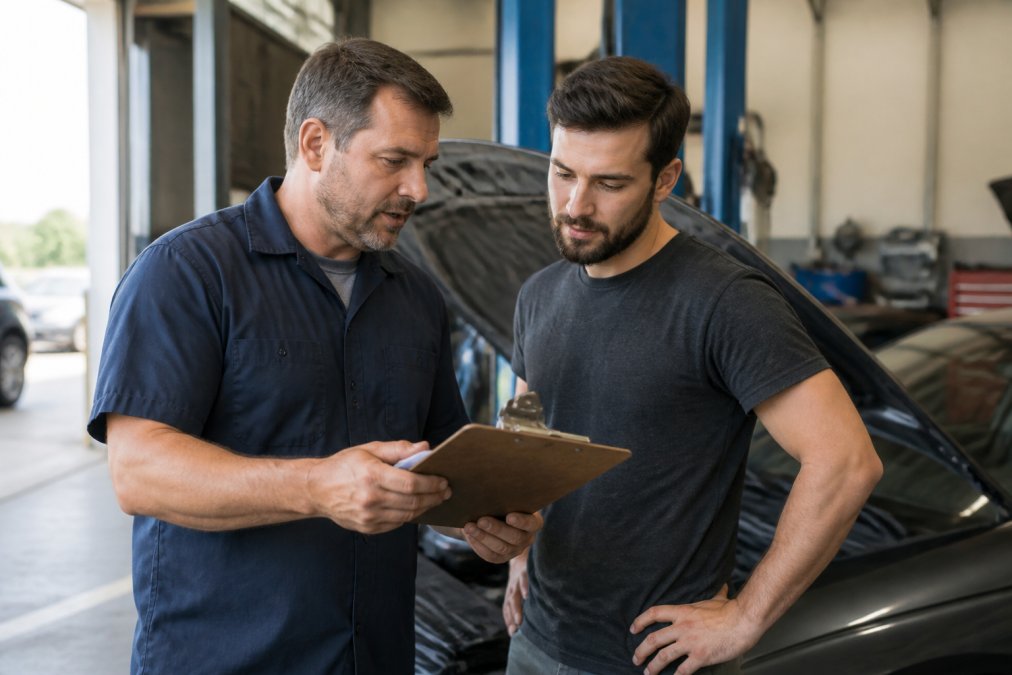
Request a Written Estimate
Before any work begins, demand a written estimate including specific parts with part numbers, labor hours and rate, total cost, additional fees, and a statement that no work will proceed beyond this estimate without your approval.
Verify Credentials and Shop Certifications
Ask to see ASE certification (the industry standard) and inquire about state licensing, warranty, years in business, and liability insurance. Write down answers. Check your state's licensing board online to verify the shop's license is current and in good standing.
Ask About Labor Rates and Parts Markup
Ask directly: "What's your hourly labor rate?" A legitimate shop states this upfront. Ask about parts: "Do you use OEM or aftermarket?" and "What's your markup on parts?" A typical markup is 20-50%; 100%+ is predatory. If a shop won't answer, find another.
How to Get a Second Opinion on Car Repairs
Getting a second opinion on major repairs protects you. A second shop can confirm whether the first shop's diagnosis is accurate.
When to Seek a Second Opinion
Get a second opinion for major repairs over $500, transmission work, engine repairs, electrical work, or any repair that seems unusual or expensive. A legitimate shop won't be offended, they understand it's smart consumer behavior.
Using OBD-II Scanner Data for Verification
Modern cars use OBD-II (On-Board Diagnostics) to store error codes when problems occur. Ask the first shop: "What error codes did you find?" Write them down. Visit a second shop and ask them to scan your vehicle, do they find the same codes?
Comparing Estimates and Repair History
Compare written estimates for differences in parts, labor hours, total cost, and warranty. If one shop quotes 8 hours and another 4 for the same repair, one is overcharging or cutting corners. Pull your repair history and look for patterns, repeated replacements of the same part or problems "fixed" twice suggest poor work.
Digital Diagnostic Verification and Post-Repair Audit
Technology helps you verify repairs. Use it to protect yourself.
Understanding Your Vehicle Inspection Report
A good inspection report includes photos, measurements, comparison to manufacturer specs, and explanation of why the part is failing. A bad report is vague and uses jargon without explanation. Ask the shop: "Can you show me the problem?" If they refuse, don't authorize the repair.
Creating a Post-Repair Audit Checklist
After work is completed, audit the repairs: inspect old parts removed, verify part numbers match the estimate, test the repaired system, check for leaks, verify warranty documentation, and review the final invoice. Address any discrepancies before leaving the shop, it's harder to prove problems after you've driven the car.
Consumer Protection and Legal Recourse
You have legal rights when dealing with dishonest mechanics. Knowing these rights protects you.
Know Your Rights Under State Consumer Laws
Most states require written estimates before work, permission before exceeding estimates, itemized invoices, warranty on parts and labor (usually 30 days minimum), and the right to inspect removed parts. Search online for "[Your State] auto repair laws" for specific requirements.
Filing a Complaint and Reporting Dishonest Practices
Report scams to your state's Attorney General, Department of Consumer Affairs, Better Business Bureau, or small claims court. Include shop name, date, detailed description, copies of estimates and invoices, and photos. Many states offer arbitration programs for auto repair disputes, ask your Attorney General.
How to Find and Maintain a Trustworthy Mechanic
Ask friends and family for recommendations, asking specifically: "Have they ever tried to sell you something you didn't need?" Check online reviews on Google, Yelp, and the Better Business Bureau. Visit the shop in person to observe cleanliness, certifications, and staff respect.
| Red Flag | What It Means | Action to Take |
|---|---|---|
| Refuses to show old parts | Hiding fraud or using scrap parts | Walk out immediately |
| Pressure to decide today | Creating false urgency | Leave and find another shop |
| Vague verbal estimates | Planning to overcharge later | Demand written estimate |
| Unnecessary upsells | Inflating the bill | Follow manufacturer maintenance schedule |
| No credentials displayed | Unqualified or unlicensed | Check state licensing board |
| Hidden fees on final bill | Bait-and-switch tactic | Get written estimate with all fees |
| Confusing technical jargon | Preventing you from asking questions | Ask for plain-language explanations |
| Payment demanded upfront | Removing your use | Use shops that bill after completion |
Frequently Asked Questions
How do you know if a mechanic is scamming you?
Watch for mechanics who refuse to show you old parts, pressure you into immediate repairs, or provide only verbal estimates instead of written ones. Dishonest mechanics often use scare tactics, recommend unnecessary services, or lack transparent pricing. Request an itemized written estimate, ask about their certifications, and get a second opinion on expensive repairs. If something feels off about their communication or pricing, trust your instincts and seek another shop.
What questions should I ask a mechanic before service?
Ask for a written estimate that itemizes all labor and parts costs. Request their shop certifications and technician credentials. Inquire about labor rates and parts markup policies. Ask how long the repair will take and what warranty coverage applies. Request permission to inspect the vehicle yourself and ask to see any defective parts after replacement. These questions help you assess honesty and avoid unnecessary upsells.
How do I get a second opinion on car repairs?
Take your vehicle and the first estimate to another certified shop for evaluation. Bring any diagnostic reports or service records. A trustworthy mechanic will review the OBD-II scanner data and manufacturer specifications independently. Compare both estimates carefully for differences in recommended repairs and labor rates. If estimates differ significantly, ask each shop to explain their findings. A second opinion is especially important for repairs exceeding $500 or major engine work.
What are the most common car repair scams?
Common scams include the low-ball estimate trap where initial pricing jumps dramatically once work begins, phantom repairs that were never needed, and diagnostic fees that aren't credited toward actual repair costs. Shops may charge inflated parts markup or use scrap parts instead of manufacturer-specified components. Some mechanics recommend preventative maintenance that isn't due according to your vehicle's service manual. Always request itemized invoices and compare repair recommendations against your owner's manual.
Federal Trade Commission guidance on auto repair and consumer rights
National Institute for Automotive Service Excellence certification standards
Consumer Reports guide to finding trustworthy mechanics and avoiding repair scams