 how-to
What to Ask When Buying a Used Car
Table of Contents
- Before You Start: What to Ask When Buying a Used Car
- Questions to Ask a Used Car Dealer
- Questions to Ask a Private Seller When Buying a Car
- Used Car Inspection Checklist: What to Look For
- Used Car Test Drive Checklist
- Red Flags and When to Walk Away
- Verify Answers With Documents and Independent Sources
- Negotiation, Warranty, and Closing
- Frequently Asked Questions
Last Updated: October 16, 2026
Before You Start: What to Ask When Buying a Used Car
Buying a used car is one of the biggest purchases most people make, and getting it wrong costs thousands. The difference comes down to asking the right questions upfront.
The best protection isn't luck, it's preparation: know what to ask, who to ask, and how to verify the answers.
Questions to Ask a Used Car Dealer
Dealerships have processes and records. Ask specific questions that force them to show their work.
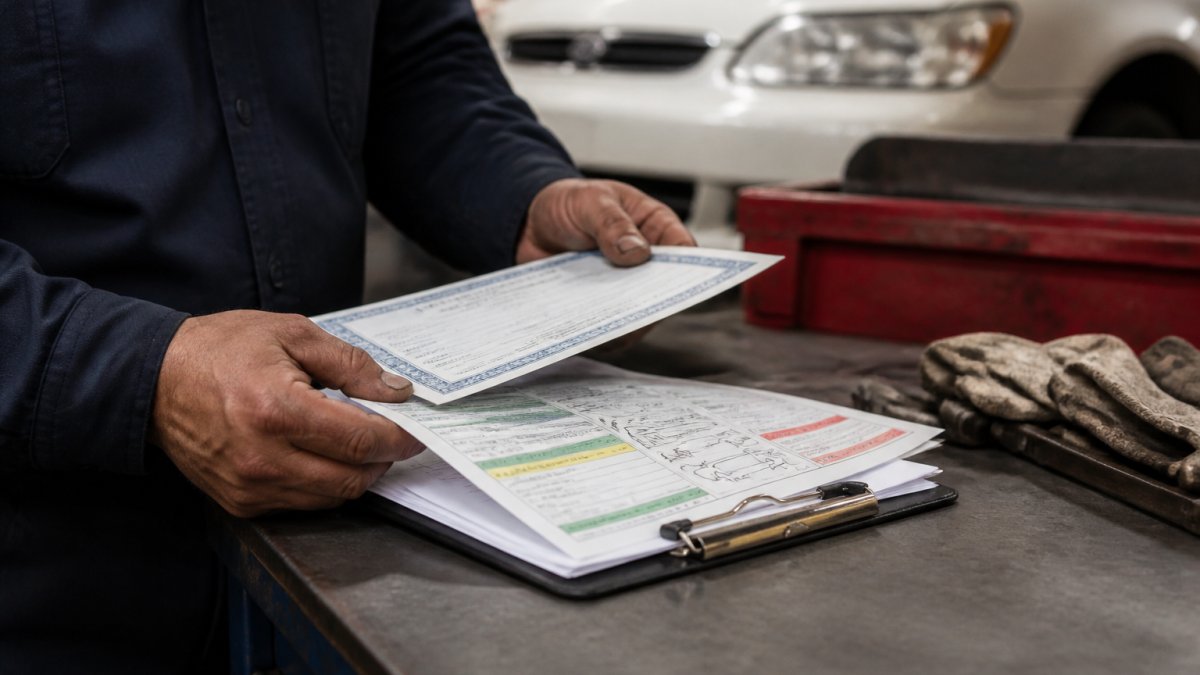
Ownership and Service History
Start by understanding the car's past. Ask the dealer directly:
- How many previous owners did this car have?
- How long did each owner keep the car?
- Do you have complete service records from the manufacturer's recommended maintenance schedule?
A car that changed hands every year is a warning sign; longer owners tend to maintain better. Service records prove regular maintenance; missing records mean you don't know what was skipped.
Ask to see actual records, not a summary, dates, mileage, and specific work performed.
Title Status and Accident History
The title tells you whether the car was in a major accident or had flood damage, non-negotiable information.
Ask these questions:
- Is this a clean title or a salvage title?
- Has this car ever been in an accident or flood?
- Has it been declared a total loss by an insurance company?
A clean title means no major damage claims.
Flood damage is serious: water gets into electrical systems, engines, and transmissions, and problems appear months later when repairs cost thousands.
Questions to Ask a Private Seller When Buying a Car
Private sellers often know their cars better than dealerships. Use that knowledge to your advantage.
Reason for Selling and Ownership Timeline
Start with why they're selling. The answer reveals a lot.
Ask directly:
- Why are you selling this car?
- How long have you owned it?
- How many miles do you drive per year?
Someone upgrading is different from someone dumping a car that needs expensive repairs. High annual mileage means more wear; low mileage means the car sat unused, which has its own problems.
Listen for hesitation or vague answers. Honest sellers give direct responses. They'll tell you about problems they've had and fixed.
Maintenance Records and Repairs
Private sellers should have receipts for major work. Request everything.
Ask for:
- All service records and receipts for repairs
- Records of oil changes and routine maintenance
- Warranty documentation for any recent work
A seller with meticulous records cared for the car. No records means you can't verify the work, and that risk has to be priced in.
Look for patterns. Multiple transmission repairs suggest a deeper problem. Repeated electrical issues point to a faulty component. One-off repairs are normal.
Used Car Inspection Checklist: What to Look For
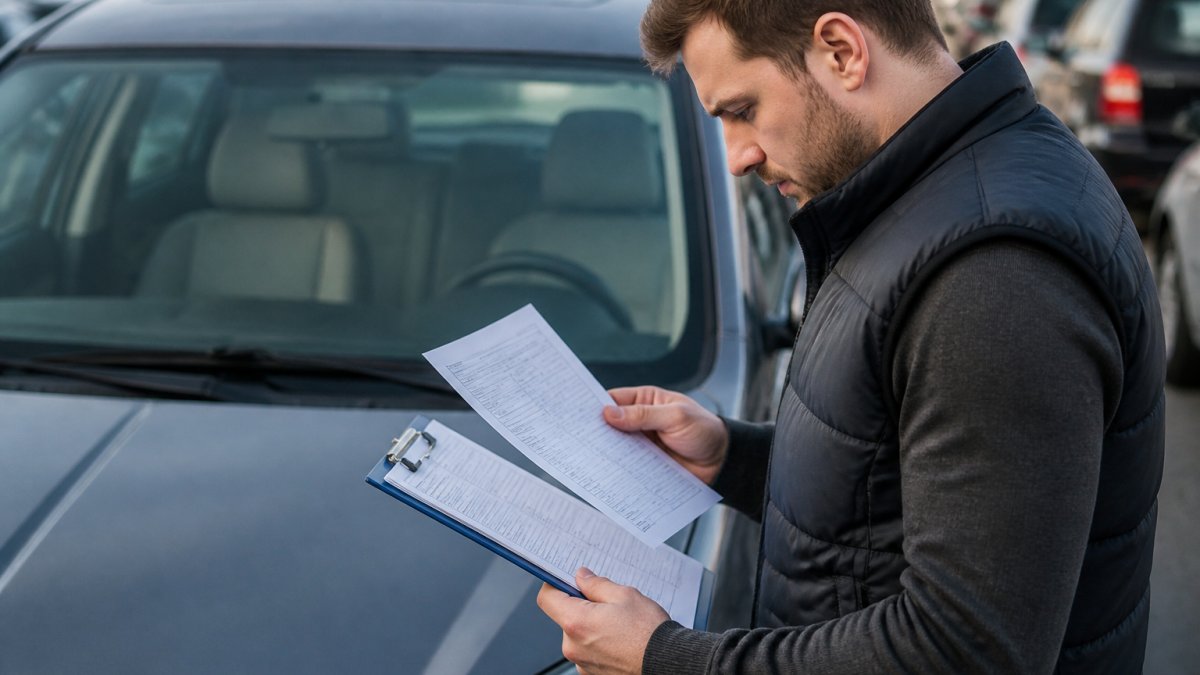
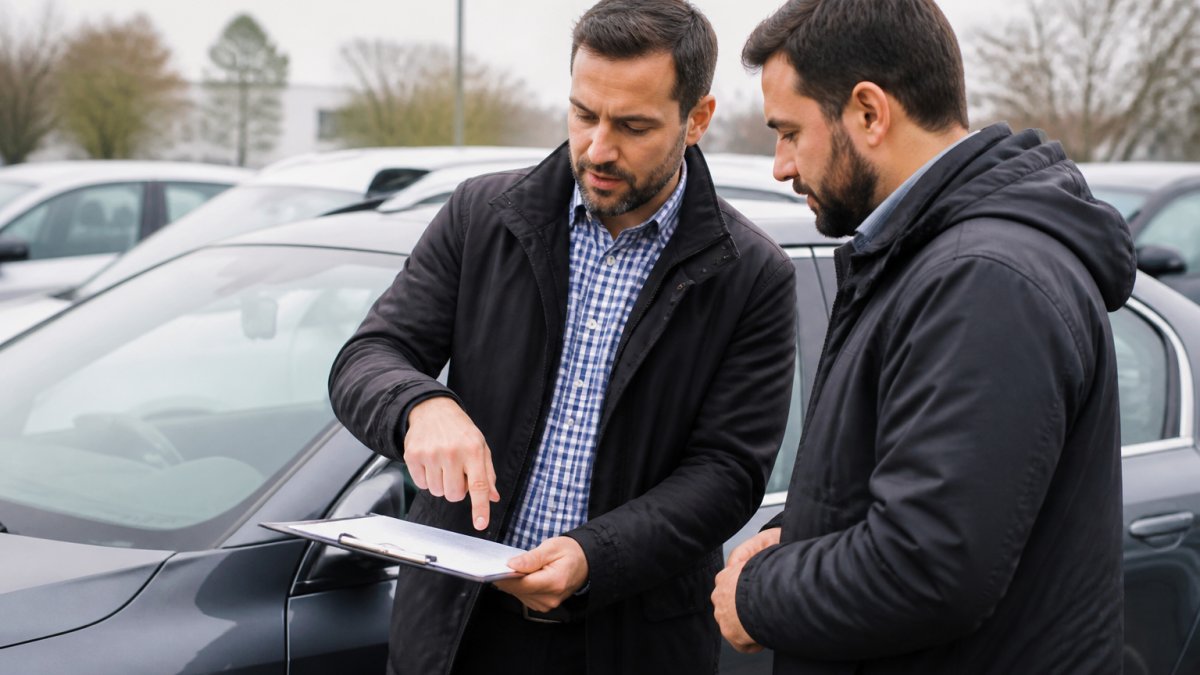
Don't rely on the seller's word. Inspect the car yourself with a flashlight, pen, and notebook.
Exterior and Interior Condition
Walk around the entire car. Check every angle.
Look for:
- Paint chips, rust, or mismatched paint (sign of repainting after damage)
- Dents, dings, or body panel gaps that don't align
- Cracks in windows or mirrors
Uneven tire wear means poor alignment or hard driving; mismatched paint suggests accident repair; panel gaps mean poor body work. None are deal-killers alone, but they add up.
Smell matters. A strong lingering odor indicates water damage, mold, or pet accidents, and fresh air freshener masks problems.
Mechanical and Fluid Checks
Open the hood. Check the basics yourself before paying for an inspection.
Examine:
- Engine oil color and level (should be brown or black, not milky or foamy)
- Coolant level and color (should be bright, not rusty)
- Brake fluid level and appearance
Milky oil means water in the engine; dark transmission fluid means overheating; corroded battery terminals suggest electrical issues.
Look under the car for fresh stains, dried stains are old, but fresh drips mean current leaks.
Used Car Test Drive Checklist
The test drive reveals how the car actually performs. Don't skip or rush it.
During your test drive, pay attention to:
- Engine starts smoothly without grinding or delay
- Transmission shifts smoothly without jerking or hesitation
- Brakes respond immediately without soft or spongy feel
Drive on city streets, highways, and rough roads.
Test the brakes hard in a safe area, they should stop firmly without fading. Test the A/C and heater too; these systems are expensive to repair.
Red Flags and When to Walk Away
Sort every red flag into one of three buckets: walk away now, renegotiate with a number, or proceed with caution, based on the cost to fix the problem and whether the seller is being straight with you.
Bucket 1: Walk Away Now
No discount justifies these flags, because the risk is unbounded or the paperwork is unworkable:
- The seller will not let you take the car to an independent mechanic. No inspection, no deal. This is the single most reliable signal that something is being hidden.
- The title is salvage, rebuilt, flood-branded, or "title pending." A branded title cuts resale value sharply and can make the car difficult or impossible to insure with some carriers. "Title pending" often means a lien has not been cleared.
- The VIN on the dashboard, the door jamb sticker, and the title do not match. Mismatched VINs point to a stolen or cloned vehicle.
Bucket 2: Renegotiate With a Number
These flags are real but priced. Get a written estimate from your mechanic, then subtract that amount plus a cushion from your offer:
- Check-engine light on or flashing. A flashing light means an active misfire that can damage the catalytic converter. A steady light can be anything from a loose gas cap to a failed sensor. Scan the codes before you decide.
- Fresh fluid leaks under the car. A few drops of oil are a seal; a puddle of transmission fluid or coolant is a repair. Identify the fluid by color and smell before you negotiate.
- Uneven tire wear or mismatched tires. This points to an alignment or suspension problem, not just worn rubber. Four new tires plus an alignment is a real cost.
Bucket 3: Proceed With Caution
These are normal for a used car and rarely justify walking away alone, but they should shape your offer and inspection:
- High mileage with strong maintenance records
- A single previous owner who drove very few miles per year
- Cosmetic wear consistent with age
The Follow-Up Question That Exposes a Lie
When a seller gives a vague answer, don't argue. Ask a specific follow-up and watch what happens:
- "You said it has never been in an accident, can you show me the history report you pulled?"
- "You said the maintenance is up to date, which shop did the last oil change, and do you have the receipt?"
- "You said the title is clean, can I see it right now, in your name?"
Honest sellers answer without hesitation and produce documents. Sellers hiding something get defensive, change the subject, or suddenly remember a "small thing." That shift is your real red flag.
Your Walk-Away Script
You don't owe anyone an explanation. A short, polite exit works every time:
"Thanks for your time. I am not comfortable moving forward without an inspection and a clean title in your name. I am going to pass."
Say it once, don't negotiate further, and leave. Never leave a deposit to "hold" a car you haven't inspected, that's one of the most common ways buyers lose money.
Verify Answers With Documents and Independent Sources
Don't take anyone's word for it. Verify everything independently.
Pull a vehicle history report using the VIN. Services like Carfax vehicle history reports and AutoCheck accident history records show accident history, title problems, and service records from participating shops.
Get an independent pre-purchase inspection.
Check for recalls using the NHTSA vehicle recall database. Enter the VIN and see if any safety recalls apply.
Call your insurance company before buying. Some cars cost significantly more to insure than others, factor that into your decision.
Ask if they'll allow a test drive with your mechanic present.
Negotiation, Warranty, and Closing
Treat closing as three jobs: price the car, price the ownership, then close safely.
Step 1: Build a Real Price Range Before You Negotiate
Don't walk in with a single number. Build a range from at least three sources:
- Online valuation tools that use your ZIP code, trim level, mileage, and condition. These give you a dealer retail number and a private-party number.
- Actual listings for the same year, make, model, and trim within a reasonable driving radius. Filter by mileage within about 20% of the car you are looking at.
- Your mechanic's written estimate for any repairs the inspection found.
Open at the low end of the private-party range, minus the repair estimate and a cushion for anything the inspection couldn't see. The goal isn't to "win", it's to land at a number you can defend with documents.
Step 2: Price the Total Cost of Ownership, Not Just the Sticker
The purchase price is only the first check you write. Before agreeing to a number, add up:
- Sales tax. Every state charges it on vehicle purchases, and the rate depends on where you register the car, not where you buy it.
- Registration, title, and plate fees. These vary widely by state and by vehicle weight and value.
- Dealer documentation fee. A negotiable line item at many dealerships. Ask for it in writing before you agree on price.
A car that's $1,500 cheaper but needs $2,500 of immediate work is not the cheaper car.
Step 3: Understand What Warranty You Are Actually Getting
- Dealer used-car warranty. Many dealerships offer a limited powertrain or "as-is" warranty. Read which components are covered, the mileage and time limits, the deductible, and whether repairs must be done at that dealership.
- Manufacturer warranty remaining. If the car is still within its original factory warranty period, that coverage may transfer to you. Ask for the in-service date and current mileage to confirm.
- Extended service contract. This is not a warranty; it is a separate product with its own exclusions. Decide whether the coverage is worth the cost based on the car's reliability record and your repair reserve.
Get every warranty term in writing on the bill of sale or a separate document. Verbal promises are worth nothing after the sale.
Step 4: Close the Deal Safely
Payment.
- Cashier's check or bank wire is the safest method for both sides. Meet at the bank so the funds can be verified in person.
- Cash works but creates risk. Meet at a police station or bank lobby during business hours and count it in front of a witness.
- Never pay with gift cards, cryptocurrency, or a wire to anyone other than the person named on the title.
Paperwork. Bring and complete:
- Bill of sale signed by both parties, with the VIN, odometer reading, sale price, date, and both names and addresses.
- Odometer disclosure statement if your state requires one. This is a federal requirement for many transfers and protects you against odometer fraud.
- Title, signed over correctly. Check that the seller's name matches their ID and that there are no liens listed. If a lien exists, the lender must release it before the title can transfer.
Title transfer.
- Complete the transfer at your state motor vehicle agency as soon as possible, usually within a set number of days after the sale. Late transfers can trigger penalties.
- Do not let the seller keep the title "to mail it later." You leave with the signed title or you do not leave with the car.
- Keep copies of everything, bill of sale, title application, payment receipt, and the seller's ID, in a safe place.
A Quick Negotiation Script
When your mechanic finds $1,200 of needed work, don't argue about the car's value. Present the estimate:
"My mechanic's written estimate for the items your car needs is $1,200. I am still interested, but I need the price to reflect that. Will you come down by that amount, or should we split it?"
This keeps the conversation about documents and numbers rather than opinions, and gives the seller a face-saving way to say yes.
Frequently Asked Questions
What are the most important questions to ask when buying a used car?
Start with ownership history, maintenance records, and accident history. Ask about the reason for selling, number of previous owners, and whether the title is clean. Request service records and details about any repairs or upcoming maintenance. For dealers, ask about their inspection process and warranty coverage. Verify answers with a vehicle history report and independent pre-purchase inspection by a trusted mechanic.
How do I check if a used car has a clean title?
Request the title document from the seller or dealer and examine it directly. A clean title shows no liens or damage history. You can also obtain a vehicle history report using the car's VIN, which reveals title status, salvage designations, and lemon-law buybacks. If the title is not clean, proceed with extreme caution or walk away.
What red flags should I watch for when buying a used car?
Be cautious of mismatched paint, fluid leaks, inconsistent maintenance records, or a seller reluctant to allow inspection. Avoid cars with salvage titles, multiple previous owners in short timeframes, or accident history. If the odometer reading seems low for the vehicle's age, or if the seller avoids answering questions, those are warning signs. Always get an independent pre-purchase inspection before committing.
Should I get a used car inspected by an independent mechanic?
Yes. An independent pre-purchase inspection by a qualified mechanic is one of the best protections you can get. They will identify mechanical issues, fluid leaks, and upcoming maintenance needs that a seller might not disclose. The inspection typically costs $100-$200 but can save you thousands in hidden repairs. Never skip this step, especially for private seller purchases.
Buying a used car doesn't have to be stressful. Ask the right questions, inspect thoroughly, verify independently, and trust your instincts. At PANEL CRAFT AUTO SALES LLC, we believe transparency and honesty make the process easier for everyone. When you're ready to find your next vehicle, we're here to help with honest inventory, complete service records, and straightforward answers to every question you ask.