 blog
Best Used Cars for Families: 2026 Buyer's Guide
Table of Contents
- What Makes a Used Car Family-Ready
- Best Used Cars for Families Under $15,000
- How to Inspect a Used Car Before Buying
- Used Car Maintenance Checklist for New Owners
- Fuel Efficiency and Powertrain Options
- Car Seat Compatibility and Safety Features
- Calculating Total Cost of Ownership
- Certified Pre-Owned vs. Private Party Purchases
- Frequently Asked Questions
Last Updated: September 25, 2026
What Makes a Used Car Family-Ready
The best used cars for families balance reliability, safety, space, and affordability. Your choice depends on your specific needs: do you need three rows for regular passengers, or is a crossover with excellent cargo capacity enough?
Families often choose based on upfront price alone, then get blindsided by repair bills. A $12,000 vehicle needing $3,000 in repairs within two years costs more than a $14,000 vehicle running reliably for five years.
The best used cars for families aren't always the newest or cheapest, they're the ones that last and perform when your family depends on them.
Best Used Cars for Families Under $15,000
Finding reliable family vehicles under $15,000 requires balancing three-row seating or cargo capacity against mechanical reliability and safety ratings. Vehicles with strong resale value indicate fewer serious problems.
Honda CR-V (2015-2018) and Toyota RAV4 (2015-2018) offer good cargo space, manageable maintenance, and strong safety ratings. Honda Odyssey and Toyota Sienna minivans (2010-2016) provide maximum interior space for multiple children, though with lower fuel economy.
Hyundai Santa Fe and Kia Sorento (2014-2017) offer three-row seating at lower price points due to faster depreciation. Nissan Rogue models offer decent reliability but smaller third rows.
Certified pre-owned vehicles cost $2,000-$3,000 more than private party sales but cover recent mechanical work and warranty protection, valuable for first-time buyers.
Reliability and Maintenance Costs
Honda and Toyota vehicles consistently show lower maintenance costs over five-year ownership periods, reflected in resale values and repair shop experience.
Transmission problems emerge in some Nissan models above 100,000 miles. Honda CR-V models handle 150,000+ miles without major powertrain work; Toyota RAV4 often exceeds 200,000 miles with routine maintenance.
Budget $500-$1,000 annually for routine maintenance. Unexpected repairs like transmission work or engine issues can exceed $2,000-$5,000.
Safety Ratings and Crash Test Performance
Safety ratings matter most for family vehicles. NHTSA crash test data shows five-star overall ratings offer significantly better protection than three-star equivalents.
Modern safety features like automatic emergency braking, blind-spot monitoring, and lane-keeping assist reduce accident likelihood. Prioritize models with strong NHTSA ratings and available safety technology.
Honda CR-V and Toyota RAV4 earn five-star NHTSA ratings. Honda Odyssey provides excellent crash test protection but fewer active safety features than crossovers.
Interior Space, Cargo Capacity, and Seating
Three-row seating matters for families with three or more children, but many find a two-row crossover with excellent cargo space more practical.
Honda Odyssey minivans offer 38.4 cubic feet of cargo space with seats folded. Toyota Sienna provides similar practicality with hybrid efficiency.
Crossovers like the CR-V and RAV4 offer 39-40 cubic feet of cargo space with rear seats folded, plus easier entry and exit compared to minivans. Families that rarely use a third row often find crossovers more convenient for daily driving.
How to Inspect a Used Car Before Buying
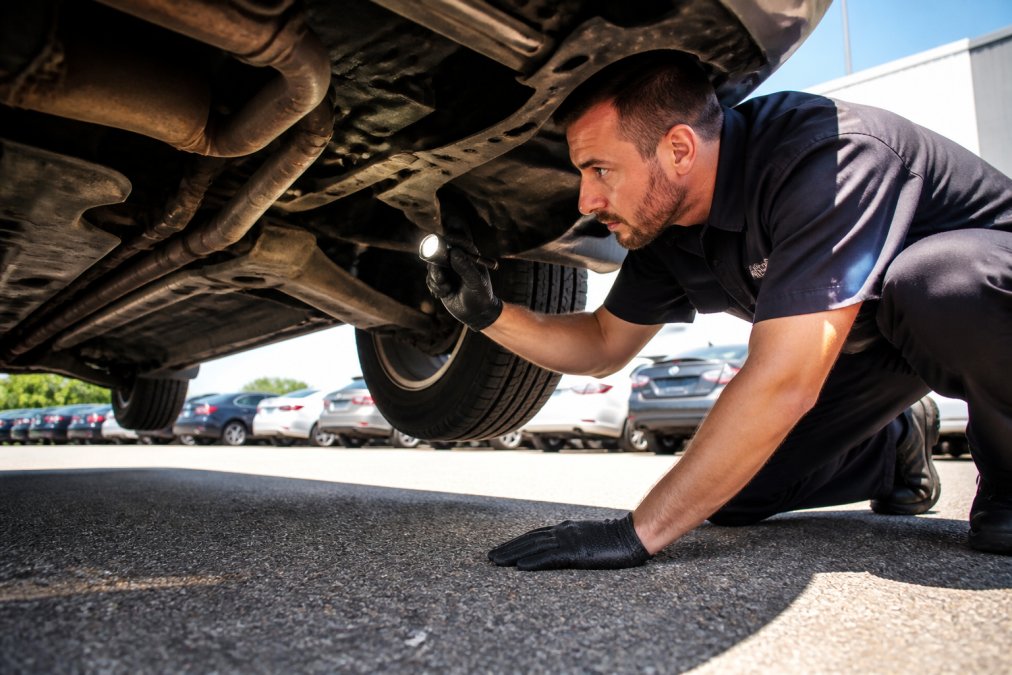
A thorough inspection separates smart purchases from expensive mistakes. Most buyers skip this step or rely entirely on the seller's claims. That's how problems hide until two weeks after purchase, when repair bills arrive.
The inspection process has two phases: your own visual check and a professional pre-purchase inspection. Your visual inspection catches obvious issues, fluid leaks, mismatched paint, worn tires, interior damage. The professional inspection reveals hidden mechanical problems that determine whether the vehicle will cost $500 or $5,000 in repairs over the next year.
Pre-Purchase Inspection Checklist
Start your inspection in daylight with the engine cold. Check fluid levels, oil, coolant, brake fluid, transmission fluid. Dark, gritty oil suggests poor maintenance history. Low coolant or brake fluid indicates potential leaks.
Examine the exterior for rust, especially along the rocker panels, wheel wells, and undercarriage. Surface rust is cosmetic; structural rust means serious problems. Check for mismatched paint, which suggests previous accidents or poor repairs.
Test all electrical systems: windows, locks, wipers, lights, climate control. Inoperative features suggest deferred maintenance or electrical problems. Start the engine and listen for unusual noises, knocking, grinding, or rough idle all indicate mechanical issues.
Drive the vehicle and test braking response, steering feel, and transmission engagement. Hesitation during acceleration, soft brakes, or transmission slipping are red flags. Listen for noise during turns, which suggests suspension wear.
| Inspection Item | What to Check | Red Flag |
|---|---|---|
| Engine | Oil level, color, condition | Dark, gritty, or low oil |
| Fluids | Coolant, brake fluid, transmission | Low levels or discoloration |
| Exterior | Paint, rust, body damage | Mismatched paint, structural rust |
| Tires | Tread depth, wear pattern | Uneven wear, bald spots |
| Interior | Seats, dashboard, controls | Excessive wear, inoperative features |
| Brakes | Responsiveness, noise | Soft pedal, grinding sounds |
| Transmission | Engagement, shifting | Hesitation, slipping, harsh shifts |
Red Flags and Maintenance History
Request the vehicle's maintenance records. Regular oil changes every 3,000-5,000 miles indicate an owner who cared for the vehicle. Gaps in maintenance history suggest neglect. Multiple transmission fluid services or repeated brake work indicate developing problems.
Check the vehicle history report through services like Carfax or AutoCheck. This reveals accident history, title issues, and odometer readings from previous registrations. A clean history doesn't guarantee reliability, but accident history is a serious concern.
Listen for what the seller doesn't say. Reluctance to show maintenance records, vague answers about why they're selling, or pressure to decide quickly are warning signs. Honest sellers provide complete history and encourage professional inspection.
Used Car Maintenance Checklist for New Owners
New owners often underestimate maintenance needs. A vehicle with 80,000 miles requires different attention than one with 40,000 miles. Create a maintenance schedule based on the vehicle's age and mileage, not just calendar time.
Fluid changes form the foundation: oil every 5,000-7,500 miles, coolant every 30,000-50,000 miles, transmission fluid every 60,000-100,000 miles depending on the vehicle. Brake fluid replacement every two years prevents moisture accumulation. Air filter replacement every 12,000-15,000 miles maintains engine efficiency.
Tire rotation every 5,000-7,000 miles extends tire life and improves safety. Brake inspection at each oil change catches wear before it becomes dangerous. Suspension components, shocks, struts, ball joints, typically need attention around 80,000-100,000 miles.
Fuel Efficiency and Powertrain Options
Fuel economy directly impacts long-term ownership costs. A vehicle averaging 22 mpg costs significantly more to operate than one averaging 28 mpg over 100,000 miles. The fuel efficiency difference compounds over time, especially for families with long commutes or frequent road trips.
Naturally aspirated engines typically deliver better reliability than turbocharged equivalents, though turbocharged engines often achieve better fuel economy. For used vehicles, the simpler naturally aspirated powertrains have proven track records and lower repair costs when problems emerge.
All-wheel drive improves traction in snow and rain but reduces fuel economy by 2-3 mpg. Families in regions with significant winter weather often justify the efficiency penalty for safety benefits. Front-wheel drive delivers better fuel economy and sufficient traction for most climates.
Hybrid powertrains, available in Toyota Sienna, Honda Odyssey, and select crossovers, reduce fuel consumption by 25-35% compared to conventional engines. The hybrid system adds cost upfront but recovers that investment through fuel savings over five to seven years of ownership. Hybrid batteries typically last the vehicle's lifetime with minimal maintenance.
Car Seat Compatibility and Safety Features
Car seat installation represents a critical safety consideration that many buyers overlook. Not all vehicles accommodate all car seats equally. Testing your specific car seat in a specific vehicle before purchase prevents post-purchase frustration and safety issues.
The LATCH (Lower Anchors and Tethers for Children) system simplifies installation compared to seat belt routing. Vehicles from 2002 onward include LATCH anchors in rear seats. Check that anchors are accessible, some vehicles have awkward seat designs that complicate installation.
LATCH System Installation
LATCH anchors consist of two lower connectors and an upper tether point. Most car seats connect to lower anchors using hooks or clamps. The upper tether connects to an anchor point behind the seat, reducing forward movement during crashes.
Proper installation requires the car seat to be snug against the vehicle seat with minimal movement.
Driver-Assistance and Blind-Spot Monitoring
Modern safety features reduce accident risk through active intervention. Automatic emergency braking applies brakes when the system detects imminent collision. Blind-spot monitoring alerts drivers to vehicles in adjacent lanes, particularly important for families with limited visibility.
Calculating Total Cost of Ownership
Purchase price represents only one component of ownership cost. A $12,000 vehicle that requires $3,000 in repairs within two years costs more than a $14,000 vehicle that runs reliably. Calculating total cost of ownership reveals which vehicles actually deliver value.
Certified Pre-Owned vs. Private Party Purchases
Certified pre-owned vehicles cost $2,000-$4,000 more than equivalent private party sales but include manufacturer-backed warranties and recent mechanical inspections. The premium covers peace of mind and warranty protection, valuable for first-time buyers or those concerned about hidden problems.
Frequently Asked Questions
What is the most reliable used family car to buy?
Reliability depends on model year, mileage, and maintenance history. Crossovers and three-row SUVs with strong safety ratings and documented service records tend to hold up well. Request a vehicle history report and have a pre-purchase inspection done by a trusted mechanic to verify the car's actual condition before committing.
How many miles is too many for a used family car?
Cars with under 100,000 miles typically offer more remaining lifespan, but modern vehicles can run reliably well beyond that if maintained properly. Focus on maintenance history rather than mileage alone. A well-serviced car with 120,000 miles may be safer than a neglected one with 80,000 miles. Always request service records.
What should I include in a used car maintenance checklist?
Check fluid levels (oil, coolant, brake fluid, transmission), inspect brakes and tires, test all lights and wipers, verify LATCH system functionality, and review the maintenance schedule. Schedule regular oil changes, filter replacements, and tire rotations. Keep records of all service work to maintain resale value and catch problems early.
What inspection steps are most important before buying a used car?
Obtain a vehicle history report, inspect the exterior for rust and accident damage, check interior wear, test the transmission and engine responsiveness, verify all safety features work, and examine the undercarriage for leaks. Have a certified mechanic perform a pre-purchase inspection to identify hidden issues that could become expensive repairs later.