 blog
Buying Reliable Used Cars: A Local Buyer's Guide
Table of Contents
- Why Buying Reliable Used Cars Matters
- Vehicle Inspection and Quality Assurance
- Used Car Inspection Checklist: What Every Buyer Needs to Know
- How to Check Vehicle History Reports
- Financing Options and Credit Approval
- Warranty Coverage and Protection Plans
- Total Cost of Ownership: Beyond the Purchase Price
- Avoiding Common Pitfalls When Buying Used
- Frequently Asked Questions
Last Updated: September 30, 2026
Why Buying Reliable Used Cars Matters
Finding a dependable vehicle doesn't require spending new-car prices. Buying reliable used cars means getting transportation that won't strand you on the highway while protecting your budget. The difference between a smart purchase and a costly mistake often comes down to how carefully you inspect the vehicle before signing paperwork.
Many buyers skip inspection or rely solely on the dealer's word, leading to expensive repairs weeks after purchase when hidden mechanical issues surface.
At PANEL CRAFT AUTO SALES LLC, we understand that trust matters when buying reliable used cars. Buyers deserve transparency about vehicle condition and honest pricing on repairs.
Vehicle Inspection and Quality Assurance
Buying reliable used cars requires a thorough inspection that reveals problems casual observation misses.
Independent inspections catch issues dealers might overlook. Look for evidence of past accidents, rust, mechanical wear, and complete service records, gaps in maintenance history signal neglect.
What to Look for During a Test Drive
A test drive reveals actual performance. Check steering responsiveness, brake feel, acceleration smoothness, and listen for unusual noises. Note if the car pulls when braking or the transmission hesitates.
Any illuminated warning light suggests a problem needing diagnosis. Test heating, air conditioning, power windows, and locks, these affect comfort and repair costs.
Drive on varied road types to test suspension. A well-maintained vehicle feels stable and responsive; clunking sounds indicate suspension problems.
Professional Inspection Before Purchase
Hire an independent mechanic ($100-$200) before purchase. They use diagnostic equipment to check engine codes, battery health, fluids, transmission, brakes, suspension, and steering, producing a detailed report with estimated repair costs.
Used Car Inspection Checklist: What Every Buyer Needs to Know
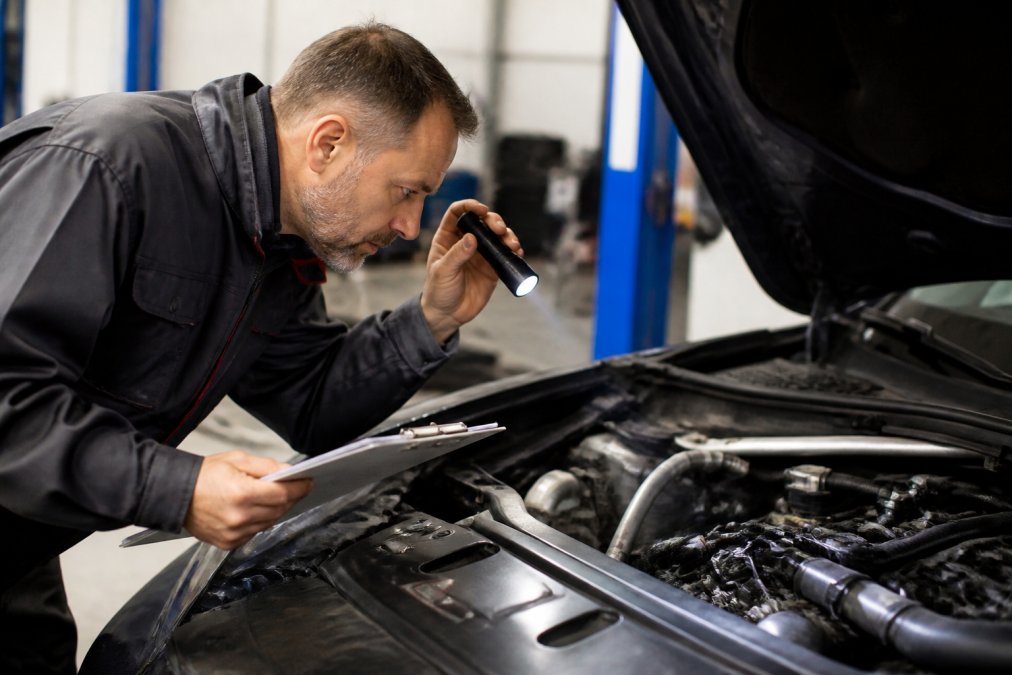
A structured checklist ensures you don't overlook critical areas when buying reliable used cars.
Exterior: Check for rust, dents, mismatched paint (accident indicator), smooth door/window/trunk operation, and tire tread depth. Uneven wear indicates alignment or suspension problems.
Interior: Test all controls, check seat and upholstery condition, verify electronics function, and inspect for water stains indicating past flooding.
Engine bay: Check fluid levels (oil amber-brown, coolant proper color), hoses for cracks, and battery terminals for corrosion.
Test drive: Engine should start easily and run smoothly. Listen for knocking or grinding. Transmission should shift smoothly; brakes should feel firm without grinding.
How to Check Vehicle History Reports
Vehicle history reports (Carfax, AutoCheck) reveal past accidents, title issues, flood damage, and salvage history by compiling data from insurance companies, repair shops, and registration agencies.
Salvage titles indicate total-loss declarations; rebuilt titles mean post-total-loss repairs. Both may have structural damage affecting safety. Avoid unless you accept the risks.
Regular maintenance history (oil changes, fluid service) indicates owner care. Gaps suggest neglect. Complete records indicate better reliability.
Verify the seller has clear title. History reports reveal liens, ownership disputes, or out-of-state title issues that create legal complications.
Financing Options and Credit Approval
Financing shapes the total cost of buying reliable used cars. Understanding your credit options and legal protections prevents overpaying and unfavorable terms.
Credit Scores and Interest Rate Impact
Lenders work across the credit spectrum with varying rates: Excellent (740+): 5-7% APR; Good (670-739): 7-10%; Fair (580-669): 10-15%; Poor (below 580): 15-20%+.
On a $15,000 vehicle over 60 months: 6% APR = $290/month, $2,400 total interest; 12% APR = $333/month, $4,980 total interest, nearly $2,600 more.
Check your credit report at AnnualCreditReport.com and dispute errors. Small score improvements lower interest rates by 1-2 percentage points, saving hundreds over the loan term.
Down Payment Strategy and Loan-to-Value Ratio
Down payment size affects monthly payments, total interest, and approval odds. Even 10-15% significantly impacts affordability.
Lenders consider loan-to-value (LTV) ratio, loan amount divided by vehicle value. Lower LTV (below 100%) qualifies for better rates. A $12,000 vehicle with $3,000 down (25%) = 75% LTV, favorable to lenders.
Smaller down payments increase total interest. Some lenders require minimum 10-15% down, especially for fair or poor credit.
Loan Terms: 36, 48, 60, and 72-Month Options
Loan terms (36-72 months) trade monthly payment against total interest. Example: $12,000 at 8% APR: 36 months = $368/month ($1,248 interest); 72 months = $212/month ($3,264 interest).
A 72-month term saves $156/month versus 36 months but costs $2,016 more in interest. Choose based on budget flexibility.
Longer terms risk negative equity: if the vehicle depreciates faster than you pay down the loan, you may owe more than it's worth.
Pre-Approval and Rate Shopping
Get pre-approval from a bank, credit union, or online lender before visiting the dealership. This shows your exact rate and loan amount, giving negotiating power.
Credit unions often offer lower rates than banks or dealerships. Online lenders like LendingClub or Upstart also serve various credit profiles.
Dealership financing is convenient but often more expensive, dealerships mark up rates for profit. If significantly higher than pre-approval, use external financing.
Truth in Lending Act Disclosures
The Truth in Lending Act requires written disclosure of APR (interest plus fees), finance charge, payment schedule, and total amount financed (the FTC). Review these carefully before signing.
Ask the lender to explain anything unclear before signing. Always read and understand the contract.
Avoiding Predatory Lending Practices
Predatory practices include yo-yo sales (demanding car back if financing fails), payment packing (adding unwanted products), spot delivery (taking car before financing closes), and negative amortization (payments not covering interest).
Protect yourself: secure pre-approval, understand total payment and term, decline unwanted add-ons, don't take the vehicle until financing is finalized, and review all paperwork.
Working with Specialized Lenders for Credit Challenges
Specialized lenders work with buyers rebuilding credit, considering income stability and employment history. Compare rates carefully, above 18% is a red flag.
When buying reliable used cars, secure pre-approval, understand loan term costs, and review disclosures before signing to ensure fair rates.
Warranty Coverage and Protection Plans
Warranty coverage determines who pays for repairs. Used vehicles typically have limited or no manufacturer warranty; extended warranties or service contracts fill this gap.
Service contracts vary in coverage. Some cover major components (engine, transmission); others include wear items (brakes, batteries). Read fine print for exclusions and deductibles.
When buying reliable used cars, warranty coverage offers peace of mind.
Total Cost of Ownership: Beyond the Purchase Price
Total cost of ownership (TCO) includes fuel, insurance, maintenance, registration, and repairs, not just purchase price. Understanding these prevents budget surprises.
Fuel Costs and EPA Ratings
EPA fuel economy ratings directly impact operating costs. A sedan at 30 MPG costs significantly less than an SUV at 18 MPG over 12,000-15,000 annual miles.
Estimate annual fuel costs: divide annual mileage by EPA rating, multiply by fuel price. Example: 25 MPG, 12,000 miles/year at $3.50/gallon = $1,680/year or $8,400 over five years.
Insurance Premiums and Safety Ratings
Insurance costs vary by vehicle age, type, safety features, and repair costs. Request quotes from multiple insurers for your specific vehicle before purchasing.
High NHTSA and IIHS safety ratings qualify for discounts and correlate with lower repair costs. Poor ratings may have lower premiums but higher accident repair costs.
Maintenance and Repair Budgets by Vehicle Age
Maintenance costs by age: 3-5 years = $500-$1,000/year (routine); 7-10 years = $1,000-$1,500/year (frequent service); 10+ years = $1,500-$2,500/year (major repairs possible).
Registration, Taxes, and Title Fees
State registration and title transfer fees vary but typically cost $100-$300 in most states. Some states charge annual registration renewal fees based on vehicle value or age. Research your state's specific fees before budgeting.
Depreciation and Resale Value
Used vehicles depreciate more slowly than new cars, but depreciation still affects your true ownership cost. A vehicle purchased for $15,000 that you sell five years later for $8,000 has a depreciation cost of $7,000, or $1,400 annually. Vehicles with strong resale value, typically Hondas, Toyotas, and other reliable brands, reduce this ownership cost.
Calculating Your Total Cost of Ownership
To estimate five-year ownership costs, add these components:
- Purchase price: $12,000
- Fuel (12,000 miles/year at $3.50/gallon, 25 MPG): $1,680/year × 5 = $8,400
- Insurance (average $1,200/year): $1,200/year × 5 = $6,000
- Maintenance and repairs (average $1,000/year): $1,000/year × 5 = $5,000
- Registration and taxes: $500
- Depreciation (resale value $7,000): $5,000
- Total five-year cost: $36,900
- Cost per mile (60,000 miles): $0.615 per mile
This framework reveals that a vehicle costing $2,000 more upfront but offering better fuel economy, lower insurance, and stronger resale value may be significantly cheaper to own over five years. Comparing vehicles on total cost of ownership, not just purchase price, leads to smarter financial decisions.
Avoiding Common Pitfalls When Buying Used
The biggest mistake buyers make is rushing the process. Taking time to inspect the vehicle, check its history, and compare financing options prevents costly errors.
Frequently Asked Questions
What should I look for when buying a used car from a dealer?
Start with the vehicle history report to check for accidents or title issues. During inspection, examine the engine, transmission, brakes, and suspension. Test drive on various road types to identify unusual noises or handling problems. Request maintenance records to verify service history. Ask about any warranty coverage or guarantees the dealer offers. A transparent dealer will welcome a pre-purchase inspection by an independent mechanic.
How do I check a vehicle history report effectively?
Obtain a report from services that compile accident history, ownership records, and title information. Look for red flags like salvage titles, flood damage, major accidents, or odometer discrepancies. Verify the number of previous owners and service intervals. Cross-reference the VIN on the vehicle with the report to ensure accuracy. If the report shows gaps in history or multiple owners in a short period, ask the dealer for clarification before proceeding.
What financing options are available for buyers with less-than-perfect credit?
Many dealerships work with lenders who specialize in bad credit financing. A larger down payment improves approval odds and lowers monthly payments. Be prepared to provide proof of income and employment. Compare interest rates across multiple lenders before accepting an offer. Some dealers offer in-house financing, which may have more flexible approval criteria. Always review the loan terms carefully and understand the total cost including interest before signing.
Should I buy a certified pre-owned vehicle or a standard used car?
Certified pre-owned vehicles undergo rigorous inspection and typically include extended warranty coverage, offering more protection. Standard used cars are usually cheaper but carry higher risk unless thoroughly inspected. Consider your budget and risk tolerance. A standard used car with a clean history report and independent inspection can be reliable. Certified pre-owned makes sense if warranty peace of mind justifies the premium price.